Random Posts

Supported by Seowaps

Major religions of the world

Major religions of the world

The four most numerous religions have billions of believers scattered throughout the planet: Christianity, Islam, Hinduism and Buddhism. The non-religious and atheists total about 1.2 billion of people and are prevalent in countries like China.

Christians

The Christianity is the religion with more followers – more than 2 billion – and was born of Judaism for almost 2 1000 years. All Christians follow the teachings of Jesus of Nazareth, but understand in different ways. The Catholics, the most numerous, there are more than 1 billion and have as leader of his Church, the Pope, who lies in the Vatican, in Italy. Other Christians, however, do not accept the authority of the Pope, as evangelicals and the Orthodox.
Christianity is an essential element in Western culture to understand, for example, a part of the artistic heritage.

Muslims

The Islam is the second religion in the world in number of believers. Was founded by the Prophet Muhammad (Muhammad in Arabic) for almost 1400 years in Arabia.The majority are Muslims from North Africa to Indonesia.The Moroccans, Algerians, Tunisians and Mauritanians are Muslims.

The Hindus

The Hinduism is the majority religion in India, the world's most populous country after China. The followers of this religion are, in actuality, more than 800 million. Hinduism has no founder or Prophet, is a very ancient religion, and his early sacred texts have more than 3000 years.

Buddhists

The Buddhism has a little more than 350 million followers in the world. Is a religion founded 2500 years ago by Buddha in India. Although it is primarily a religion of Asia, there are also Buddhists in other continents.

The Jews

Despite the importance throughout history, compared theJudaism does not have many followers: in total, there are about 16 million. Of these, 4.78 million live in Israel and make up 75% of the population of that country. The United States is the country in which they live more Jews: 5.64 million (approximately 2.1% of the population).

The non-religious and atheists

The non-religious are hard to count because many of them also appear as members of any religion. In the world there must be about 1.2 billion of non-religious and atheists. There are countries, such as China and Russia, in which the majority of the population have no religion.


History of Protestantism

Generic name that encompasses all Christian churches in the West that conflicted with the Church of Rome in the 18th century. XVI, denying the primacy of Peter and papal authority. The term was at first only the ' Lutheran ', and was born from the ' protest ' that the main protectors of German Lutheranism, formulated against the Coil (April 19, 1529) diet, convened by Charles V, in the rebellion of Augustinian Friar.
With the diversification of reformed churches, the word was applied to them interchangeably, although under denial of some of them, notably the Anglican Church. The progressive decrease of papal prestige, fruit of the captivity of Avignon, the nefarious Western schism, the disagreements between the Popes and the Council of Basel, on one side, and on the other, the corruption that was raging inside the Catholic clergy, not sparing the high hierarchy even their own religious orders, gave motivation and unexpected success to the cry of ' Reform '.
This benefit with the newfound press, which multiplied and spread the writings of Luther, Calvin and Zwingli, spread across Europe, particularly among anglo-Germanic peoples and between the North of the continent.
History of Protestantism

The head of this religious revolution was Martin Luther, the religious Order of St. Augustine. It joined, they say, in a vote that did, under the terror of the spokes of a storm.Restless nature, tormented scruples and the idea of inherent human corruption by original sin, chased, so, by the fear of hell, refuge in a blind faith in the redemption ofJesus Christ, harvested in the reading of the Epistles of St.
Paulo. This same temperament took him to the apostolate of preaching uninterrupted; so, rarely had the opportunity to recite the Breviary and celebrate mass-according to his confession in a letter. To October 31 1517, unsown against the papal order to preach the indulgences, posted on the doors of the Norman Church his 95 theses; in November 1518, rejected the Pope's authority and called for the Ecumenical Council; in July 1519, could see the Bible as sole source of faith; in December 1520, supported by humanists, for gentlemen and revolutionaries by the Prince elector of Saxony, broke all ties with Rome, burning in the public square the Papal Bull of excommunication: even then, condemned clerical celibacy, the monastic vows, veneration to the images of the Saints, purgatory and the celebration of the mass.
In addition to Melanchton, his inseparable companion of preaching by Germany, supported the Friars from various religious orders: Lang, Guttel and Stiefeld, of his own Office; Rhegio urban, of Carmel; Bernadino Ochino, Franciscan Capuchin; and the Ecolampádio Benedictine.Moral and political reasons did add to the Schism numerous bishops – German princes; King Gustaf Wasa, of Sweden, Henry VIII and Elizabeth I of England.Identifying the religious truth with the will of the Princes of each region, the ' Reform ' initiated under the serious risk of internal dilution by contradiction – for missing the essential unity of doctrine.
Then John Calvin, who came to systematize the essential points of Protestantism, have branched into several streams. The fundamental dogma, where everything logically gives rise to as necessary corollary, is the doctrine of justification by faith, redemption thanks to the infinite merits of the blood of Christ. Luther relies on numerous texts of the Pauline Epistles, which Catholics interpret opposed the birth of vs. 14 et seq. of Chapter 2 of the epistle of the Apostle Saint James: "faith without works is dead". Calvin argues even the theory of predestination: each has his destiny set precito or saved forever, regardless of their cooperation – that, without any divine injustice, since Wisdom knows ab aeterno the circumstances in which they live certain creature and their reactions before the same.
Now the Scripture is clear and comprehensive repertoire of the faith which justifies. Hence, refusing reformers the primacy of the jurisdiction of the Supreme Pontiff, defined by Luther as "the Antichrist himself", and Rome as "the whore of Babylon". The text "you are Peter (Rock) and on this rock I will build my church" (Mt 16, 18) give the protesters, if not deny their literary or historical authenticity, just the meaning of an honorary primacy to Simon Peter, Prince of the Apostles.
As a result, dissolves the papal jurisdiction to govern the Church of Christ and to teach or set any dogma. And since the Church dies at authority and purity to interpret the texts of the Bible, every believer is not a freedom onímoda, according to individual criteria, which would lead to ' free ' examination, repulsed by the heads of the energy reform, but the search for communication of personal encounter with God. Corrupted intrinsically by original sin, human reason is taken necessarily to error;any personal exegesis of Scripture "will not produce faith in the hearts of men, unless it is sealed by the inner testimony of the Holy Spirit" – the teaching of Calvin.
In order to avoid the inevitable desagregamento that sprang from the lack of supreme authority, Luther appealed to the Cardinals created, in which the civil administration replaces the Bishops; Calvin already adopted more democratic regime, making the direction of ecclesiastical Ministry Church, as an institution of Christ himself.
Although condemned in theory, the free exam prevailed in practice. The time, in addition, would generate constant multiplication of denominational sects. Proliferate today over 200 Protestant branches. Here are some of the most important:
Adventists. The Adventist Church was established by William Miller in the century before last. Believe in the return of Christ to Earth into a realm of 1000 years (Millennium); Adventists keep the seventh day (Saturday).
Baptists. From England, in the beginning of the 20th century. XVII, developed in the USA, where they occupy the second place among the Protestant denominations.Give particular importance to baptism by immersion and are organized in autonomous congregations.
Congregationalist circles. Group of separatists or dissenting from the Church of England, who in 1580 fled to the Netherlands in order to get rid of the persecution that they were victims. Organized in brigades and its key point is the spiritual autonomy of each congregation. The Puritans who emigrated to the United States were a Congregationalist branch.
Disciples of Christ. Dating back to 1809. The sect was created by Thomas Campbell, along with his son, Abdul, in Kentucky, USA. Aimed both to bring together all branches of a single Christian Church: vindicavam only fidelity to Christ and the freedom to interpret the Scripture.
Anglicans. Members of the Church of England, created by Henry VIII, after his excommunication by the Pope. Dating back to the year 1534. Do not heed the supremacy of the Roman Pontiff, even though its main branch follow Catholic doctrine and liturgy; but not all accept the seven sacraments. The Protestant episcopal Church of the United States, founded in Jamestown, in 1607, is subdivision of the Church of England.
Lutherans. Members of the reformist group more powerful; for them, the redemption is the result of the unique merits of Christ and the faith which justifies-doctrine condensed into the book of Concord. The sacraments, confirmation, marriage, the priesthood, and the last rites.
Methodists. The Methodist Church arose at the University of Oxford in 1729, created by brothers John and Charles Wesley. The cult of inner life illuminated by the Holy Spirit, giving certainty to the faithful of his adoption as son of God, as well as the divergence in the administration of the sacraments, took them to the schism of the Anglican Church.
Mormons (Church of Jesus Christ of Saints of the last days). Founded by Joseph Smith in 1830 in New York.Mormon is the name of a prophet. It is intended that around 600 BC a wave of Jews emigrated to America headed by a prophet, Lehi. Were divided into two groups: Lamanites, that have become wild and are the ancestors of the American Indians; and the Nephites — highly civilized. Christ revealed after the Ascension to the Mormon, Nephite Prophet who recorded the new tablets of the law on Golden plates. His son, Moroni, made additions and buried them.
Were transmitted 1400 years later to Joseph Smith.Mormons believe in a personal God, in Christ, in Revelation, in baptism, the penalty for sins and the salvation of humanity, thanks to the observance of the Evangelical precepts and to the blood of Christ. In 1890, by Congress's legal device, they had to leave polygamy who adopted.
Pentecostals. The charismatic movement, the Pentecostal churches are based on baptism by the Holy Spirit and the gift of spiritual power that manifests itself including the gift of speaking in tongues, as described in the Gospels. In its institutional form, dating back to the early 1950.
Presbyterians. Constitute a sect almost Calvinist, John Knox took to Scotland, where he obtained the Parliament which were recognized as official Church in 1560. Adopt the baptism and communion, decrying the trappings: liturgical so their religious services are conspicuous by their simplicity. Not recognize the hierarchical supremacy of the episcopate, identifying the priest the dignity of the Shepherd and the craft of teaching.
Quakers. Popular name of the members of the ' society of friends ', George Fox created in England, in the 19th century. XVII. The name quakers (' shaky ') comes from the phrase said by the founder: "Tremble before God".Recognize the Holy Spirit the inner guide of souls; don't swear; are peaceful and adopt the archaic thou treatment.
Jehovah's witnesses. Founded in the late 19th century.XIX by Charles Iaze Russell, the sect rejects the teachings of other Christian churches and the power of the State;see Christ as a created being and wait for the advent of the Millennium after the battle of Armaggedon, qualsó the good ones will survive.
Unitarians. Protestant sect who only believe in one person, God, and disbelieve the divinity of Christ. For them, the Supreme authority is the religious experience enlightened by reason. Dating back to the 19th century.XVII, time in which had religious communities in Poland and in Hungary who professed such ideas; now living in English-speaking lands; His Apostles, initiators of Unitarianism in England, were Joseph Prisdtley and Theophilus Lindsey.
Protestantism in Brazil. The Protestant religions constitute the second religious group from Brazil.Appears at the forefront; Second, the Rio Grande do Sul;at last, the territory of Roraima.
Bibligrafia
The Encyclopedia Britannica of Brazil, vol. 13, p. 49-52.Rio de Janeiro-São Paulo, 1995.


History of Christianity

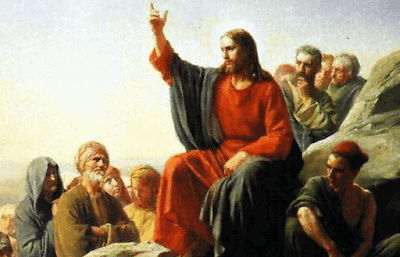
Among the numerous messianic sects arising in the Jewish world at the beginning of the first Millennium, included the disciples of Jesus of Nazareth, former followers of John the Baptist. The Christian community was accepted within Judaism until the year 65, approximately, when consummated the inevitable rupture between the two religious factions, motivated by the Messiah condition attributed to Jesus by his followers.

Historical background

On the occasion of the advent of Christianity, the entire region of the Mediterranean sea was under the power of Rome. Palestine, since the division between the northern Kingdom (Israel) and southern (Judah), which took place after the death of King Solomon, had been weaker politically and socially, in a process that culminated with the fall of Samaria, capital of the northern Kingdom in 722 BC, the Kingdom of Judah remained independent until the Babylonian conquest in 605 BCE To 586 the 539 , the Jews remained in captivity in Babylon, but to ascend to power the Persians have promoted the restoration, have allowed the maintenance of religious and cultural customs of the Jews and authorized the return of many of them to Judah. After the captivity in Babylon, the region of Judah came to be called Judea.
In 333 BC, the Greeks, with Alexander the great, subdued the Persians and included Palestine in the fields Macedonians. After the death of Alexander in 323, the vast Empire was divided between his generals and emerged, after several years of fighting, four major kingdoms or Empires, of which the most important were the Egypt and Syria. Palestine, situated between the two, serving as a strategic passageway during the frequent military campaigns. Judea, whose social, political and religious existence concentrated in the city of Jerusalem, he paid tribute to Egypt and Syria. In the year 198 BC, the Seleucid King Antiochus III took the entire region, Judea to Syria's dominance.
History of Christianity

In 175 BC, Antiochus Epiphanes ascended to the Syrian throne, son of Antiochus III, who became involved almost immediately in a war with Egypt, which never left completely victorious, especially for the support that the Jewish religious leaders, mainly scribes, gave to the Egyptians. Religion and politics were United in Judea, where the high priest presiding over both the priests in the temple as the elders in the Sanhedrin Court that judged the criminal or administrative issues. Resolved to punish the Jews, Antiochus moved forward about Jerusalem, brought down its walls and plundered the temple, carrying the sacred vessels. To put an end to the Jewish religion, an obstacle to the submission of the Jews, forbade all forms of worship of Yahweh and initiated prosecutions. The Jerusalem Temple was desecrated with the construction of a pagan altar upon the altar of burnt offering.
Against this desecration revolted the Maccabees (or Hasmonean Dynasty), as well as all Jews devotees, who gathered in the mountains to organize the fight against the Syrians. The movement became widespread and the religious war quickly became a series of triumphs.Jerusalem was retaken and the reconsagrado Temple in December 165 BC Four years later, however, a mighty Syrian army defeated the Maccabees, that just might keep, as small rebel group, at Micmash.
This group gradually regained confidence of Jews and extended its influence and power, especially under John Hyrcanus, and came to dominate most of Palestine, except the northern Galilee, conquered later by Aristobulus, the son of Hyrcanus. The Sadducees supported the rebels, but the Pharisees, or separatist, disapproved of the policy of Hyrcanus because of agreements made with Rome. Against the rise of Alexander Jannaeus, who amassed the offices of King and high priest, the Pharisees revolted, causing violent civil war that lasted several years, sometimes with the supremacy of these, now of the Sadducees. The fight only ended with the capture of Jerusalem by Pompey in 63 BC, which made the Jews subjects of Rome.
Pompey named the Edomite (a descendant of Esau) Antipater Procurator of Judea. He was succeeded by his son Herod the great (47 BC), who, to gain the sympathy of the people, rebuilt with great splendour the Temple in Jerusalem. Jesus was born during his reign, probably in the year 6. The massacre of the innocents in Bethlehem, took place under Herod.
Herod's Kingdom was divided, in her will, among three of his sons: Archelaus (Judea and Samaria), Herod Antipas (Galilee and Peréia) and Philip (Ituréia and Traconítides).Archelaus was exiled in the year 6 of our era and its territory became administered by the Roman procurators, of which the fifth would Pilate. Herod Antipas ruled until the year 39, when he was deposed and banished, and Philip died without heirs in 34. Agrippa I, grandson of Herod the great and protected from Caligula, managed to reunify the realm.

Religious situation

For the Roman common subject, the borders of the Empire coincided with those of the civilized world. Was not aware of the Indian or Chinese civilizations, admired the great works and boasted of his empire. The communication was facilitated by great roads and by vessels. A common language, the Greek, favoured the cultural exchange and the great mixture of religious interests, whose sources were Judaism, other Eastern religions, the popular religiosity and the Greek thought.

Judaism

Despite the political domination of Judea by foreigners, Judaism has maintained almost always intact their religious institutions. A highly organized and politically influential clergy controlled the religious life and, mostly through the Sanhedrin, determined political positions. In general the Jews kept the Messianic hope, but were divided into factions and parties, whose motivations were to a greater or lesser fidelity to religious beliefs of the past or the acting political purposes.
The main organized groups among the Jews were the Sadducees and the Pharisees. The first, composed of priests and aristocrats, exercised great political and economic influence and maintained good relations with Rome. Although strictly follow the Mosaic law, the Sadducees, strongly impregnated of Hellenic culture, denied the afterlife and messianism. The Pharisees, in contrast, had more religious than political concerns. Its origin dates back to the era of the Maccabees, around 130 BC, and his name means "separated", in view of the efforts made to maintain the Jewish faith away from all contact with paganism. Believed in eternal life and were ardent in their messianic hopes. Its activity is directed mainly to the masses, in which sought to instill the spirit of Holiness by the dissemination of traditional religious teachings.
There were also small groups of mystical life, gathered in communities of faith and work, one of which probably originated from John the Baptist. One of the most important of these groups was the Qumran community, rooted to the shoreline of the dead sea, no doubt linked to the Essenes. Its existence was revealed by the Dead Sea scrolls, discovered in 1948. Such communities regarded themselves as the faithful remnant of Jewish history.Kept the law, maintained periodic purification rituals, constantly renewing its accession to the Covenant with God and attend a sacred meal of bread and wine.Believed in the establishment of a Kingdom brought by a new Prophet.
The Essenes, another group of monastic type, existed, according to the historian Josephus, since 150 BC their communities if distributed by several Palestinian villages and exerted great influence on Jewish life. Supported the Pharisees, against the Sadducees, though differed from the first by practicing celibacy, rejecting animal sacrifice and deny the resurrection of the body. Accept the immortality of the soul and the punishment or reward after death. Some scholars claim that both John the Baptist as Jesus belonged to the Essene community.

Syncretism and popular religiosity

Many other cults and sects vied followers within the general framework of high expectations. Among the most successful movements were the Oriental cults of mystery, of enormous popularity, favored by the arrival of slaves from the East, adopted even by Roman soldiers. Among these are the cults of ISIS and Serapis, of Egypt; Cybele and Attis, of Syria, and Mithras, from Persia. These religions, alongside other expressions of Judaism itself, favored a remarkable syncretism, perhaps the greatest movement of amalgam of various religions registered by history, which included summaries of radically opposing beliefs. One example is the merger of worship naturalists with the god worshipped by Israel (Dionysus Sabázio, Phrygia, and the Kyrios Sabaoth).
Among the people practiced large number of superstitions. All acts of life, the professions, the seasons and the most important events had their gods, which in the future would appear, transmudados in santos, in the history of the Christian Church and in your calendar.Many preachers have become popular and frequently abused of the beliefs of the people. Also the Governors have created State cults and for themselves. The cult of the goddess Roma was already in Smyrna in 195 BC. In Pergamon, in the year 29 BC, there was a temple of Rome and Augustus.

Greek thought

The predominant influence among the more educated people of the population was, however, of the Greek philosophical thought, which would have great importance in the later formation of Christian theology.The "natural virtues" taught by Socrates, the idea of the immortality of the soul, Plato, the divine spark and the logos of Aristotle were some of the ideas that have shaped Christian thought. Between stoicism and Christianity there was even some common elements. The notion of a universal source and shaping of everything that exists, a soul that he expressed himself in human reason — that is, God himself in each one — influenced decisively in shaping Christian theology. Jewish philosopher Philo of Alexandria, a contemporary of Jesus, tried to recast the Jewish faith in God through the Stoic and Platonic concepts, providing another source to the theology of the church fathers.

Other influences

The rebuilding of the temple, he recovered one of the most important symbols of the history of the Jewish people, he pointed out the contrast with the informality and simplicity of primitive Christianity and was one of the images that Jesus used to assert their design on a new relationship with the God of Israel. The Greek translation of the old testament, of the 70, another stimulus to thought at the time, favoured the universalization of Christianity. The authors of the New Testament used this text to compare the old and new doctrines.

Doctrines

The politics of Rome to the fullest extent of their domains was characterized by respect for different customs and languages of the conquered peoples, which favored the variety of religious ideas, both the popular character as the more rational in nature. Christianity arose, therefore, at a time of intense religious fermentation; his doctrine and theory suffered, throughout their period of training, the impact of these various sources. Christian concepts if localized at the beginning, to an original accent conferred upon the religious backdrop of the time. The first revelations, voiced by John the Baptist, confirmed and illustrated abundantly through Jesus, referred to some religious elements known and others whose originality is the dynamic force of the expansion of Christianity.
The idea of a single God and righteous, emphasized by the last prophets of Judaism in the old testament, Jesus added a personal revelation, which didn't have the content that the Jews had expected — a political realm – but the suffering Messiah, who would give their lives for the remission of sins and the salvation of all men who accepted. The rigidity of the final revelation and consummated, pride and conviction of some religious parties and civil status in many cases, Jesus opposed the freedom of God's power. Although it does not reject the law and the prophets, principles entrenched in the official interpretations broke.
The denial of the world, a life of rewards or punishments, new rites of initiation (baptism instead of circumcision), equality among all men, a moral and just life based on God's sovereignty were the teachings that Jesus imparted, leading a life of poverty and sacrifice, then, as the stories of the New Testament, of many miracles. The statement of Jesus about his own death, which would became a common belief among his first disciples and incorporated the fundamental doctrines established by the Apostle Paul.

Teaching of Jesus

The public activity of Jesus according to the Gospel of Luke, in the 15th year of the reign of Tiberius, corresponding to 28 year, when Jesus would have 32 years of age. His preaching was anticipated by John the Baptist, ascetic life, which many would hear in the desert, being baptized when confessed regret and the desire of new life. Jesus not only made many references to John, but he was also baptized. The teaching of Jesus is narrated in the Gospels of Matthew, mark and Luke, synoptic, and called John.
Whether Jesus considered himself the Messiah (Khristós in Greek) is a problem. The Gospels generally refer to it as such, since when were written (more or less between 70 and 98), such a belief was already sedimented between the disciples of Jesus. Nevertheless, texts such as the Mc 9:41 and 14:61, in which the name Christ appears, are of questionable authenticity, according to the opinion of exegetes conservatives, who consider the use of the Greek word Khristós without article, Paul language itself and not from the synoptic Gospels.
Thus Jesus manifested itself as the revelation of the Father, who came and who would return — which constituted a blasphemy to the Jews — and as the way, the truth and the Life. In his method of teaching the parables predominated, of which approximately 35 contained in the Gospels. There was in his preaching, however, the formal character of the whole elaborate theology, but only a general scheme of doctrine. In the first phase of his Ministry, Jesus talks about the Kingdom, its reality, character and meaning, but not relating to your person. Only in Caesarea of Philip (Mc 8:29) directs to Peter a question that induces the Apostle the answer that Jesus was the Messiah.

Preparation of theology

The preaching of the first apostles, addressed to the Jews, still did not constitute a Christology set, which would begin to be drawn up later, with the initial chapters of the acts and the Epistles of James. Reiterated stating that Jesus was the Lord and Christ, the one whom the prophets spoke, who came to the judgment and salvation.
It fell to Paul, converted around the year 35, the main task in the expansion of Christianity beyond the borders of Palestine and the systematization of their doctrines. The polemics of Paul with the Jews, raised by the increasing number of conversions, were instrumental in the characterization of Christianity as a universal religion and not as a Jewish sect.
The question about permission to the Jews to eat together with Gentiles and the rite of circumcision were preponderant elements in this debate and main themes of the Council of Jerusalem, gathered in the year 49. The Epistles of Paul, addressed to communities founded by him or by other missionaries, provided the basis for the doctrine of the incarnation, the Trinity, the Atonement, the Holy Spirit, of the Organization of the Church and the most complete equality of men, starting between Jews and Gentiles.
The fourth Gospel, attributed to John, which appeared between 95 and 98 (according to others, in 110), perhaps in Ephesus, gave another important contribution to the systematization of the Christian doctrines. It is unclear, however, if the peculiarity of his ideas can be attributed to effective teaching and knowledge of the life of Jesus or the influence of Greek thought or Gnostic. The use of the Greek word logos, in the preface of the book, explains the selection of the narratives and their depth, since the author knew the Jewish world and the Greek. The fourth Gospel sounds, many times, a continuation of the thought of St. Paul (Paul was at length in Ephesus), especially the texts on the pre-existence of Christ and the universality of its message.

Councils and schools

The book of the acts of the Apostles, written around the year about 90 events probably between 29 and 63, is the first effort of organization of Christianity. At 15 registers the first Council, in Jerusalem, in the year 49. From the middle of the second century there were councils or synods, with the purpose of solving issues relating to the heresies of the time. At the end of this century, settled in Alexandria, the culture of the Roman Empire, the Catechumens school, an institution where he taught Greek philosophy and Christian doctrine.
From 325, with the Council of Nicaea, began to be made larger councils, ecumenical, called also called for the purpose of establishing the position of the Church regarding the doctrines considered heretical.
In the 19th century, have multiplied the studies that examine Christian doctrine within the context of historical and social situations, as opposed to monolithic and static forms that they considered the doctrines as a set of immutable truths.

Expansion

The persecution of the Church, moved by Saul of Tarsus, before his conversion, when it adopted the name Paul, and the death of the first martyr, Stephen, had as a consequence the expansion of Christianity beyond the borders of Palestine, when fugitives from persecution reached the Phoenicia, Cyprus and Antioch. The conversion of Paul, who before chasing the Christians, has greatly contributed to the dissemination of the new faith.
After the end of the Apostolic age, a period of about 40 years remained obscure in the history of Christianity.There are indications that this season, in which they were written the Gospels and the Epistles, met many changes and intense missionary work. Around the year 100, Christianity had already been established in Macedonia, in Anatolia, in Syria, in Greece, in Rome and, possibly, in Egypt. Despite differences among the churches in the various locations where Christianity, has your organization in mid-2nd century and was one of the means used by the early Church to combat more effectively the heresies of the time.
At the end of the 2nd century the Christian Church already termed Catholic (universal), a term first used by Saint Ignatius of Antioch. The first attempt to establish the Canon of the New Testament is also from this period.Around the year 150, the Bible was translated into Latin, for use in Africa. From the year 300, when Christianity was already present in all points of the Empire — now including North Africa, central Italy, southern Gaul and Spain-, several government officials and Imperial officials became, taking Christianity to the higher classes of society and also to members of the Roman army.
In the 4th century the situation changed radically, especially in the West, first with the voluntary departure of Diocletian in 305, and later with an edict of tolerance for Christians by Galerius, "under the condition that no practice that is contrary to the discipline". Constantine, acclaimed Emperor in the East, left for the conquest of the West. During sleep, imagined have seen the initials of the name of Christ, with the inscription "in hoc signo vinces" ("in this sign you will conquer"). To succeed in the battle against Maxentius in 312, joined the Christianity and, in 313, granted full freedom to the Christians. In 323, with the defeat of Licinius, who still controlled part of the Empire, were abolished completely the persecutions to Christianity. Thus began a new phase of its history: the Union with political power, which culminated under the rule of Theodosius I in 380, when was proclaimed official State religion.


History of the Catholic Church

Since the Council of Trent between 1545 and 1563 held, the Christian Church subject to papal authority began to call themselves Roman Catholic, in opposition to Protestant churches formed from the Reform. Defined as one, Holy, Catholic and Apostolic, and considers his boss as rightful heir to the Chair of the Apostle Peter, Holy Pope, according to the Gospel, by Christ himself.
The term was used by some Catholic authors (Aristotle, Zeno, Polybius), before the Christian era, with the sense of universality. Applied to the Church first appears around the year 105 of the Christian era in the letter of Ignatius, Bishop of Antioch. In the early texts, shall apply to the General Church considered in relation to local churches. In the authors of the second century of the Christian era (Justin Martyr, Irenaeus, Tertullian, Cyprian), the term takes on a double meaning: the geographic universality, because in the opinion of these authors the Church had already reached the end of the world; and the true Church, Orthodox, authentic, as opposed to cults that were starting to emerge.

History of Christianity in Palestine

At the time of Jesus Christ, when Palestine was ruled by the Romans, the official religion of the Jewish people by the editor of the Bible known as the old testament. While not wishing to break with the Jewish religious tradition, the message of Christ could highlight especially the ethical principles of love and brotherhood, opposed to religious formalism advocated by the Pharisees and doctors of the Mosaic law.
This message of more spiritual and less legalistic went on to be released especially among poor layers of the population, in popular language, Aramaic, through parables.
 Council of Jerusalem

After the death of Christ, his disciples were called Christians, and gathered in small communities, sought to keep alive the memory of his teachings, while participating in the Jewish religious tradition.
The most important event of this period was the first Christian Assembly, known as the Council of Jerusalem, which emerged two pastoral prospects. On the other hand, under the leadership of Apostle James, were the ones that were intended to highlight the root of the new Jewish faith; on the other, the followers of Paul, who wanted an immediate opening of the Christian message to the Greco-Roman cultural world.
The decision to reconcile opted for a cautious opening, proposed by Pedro, already chosen by Christ as head of its first group of disciples. This Jewish Christianity was, however, relatively soon, in view of the destruction of Jerusalem, ordered by the Emperor Titus in the year 70.From then on, the Christian faith has expanded in the provinces of Anatolia and in the capital of the Roman Empire.

Christianity in the Hellenistic world

It was mainly thanks to the work of St. Paul, the Evangelist Christian message in Anatolia, which the religious movement started by Christ in Palestine was extended to the Hellenic world. The belief of poor peasants and fishermen went on to win supporters among the families belonging to the urban middle classes. The Christian worship was gradually adapted to forms of mystical expression of the Orient and their liturgy began to employ the Greek language. There was also the translation of the Bible into Greek, known as version of 70, and the ethical attitude proposed by Christianity supplemented with a conceptual and doctrinal approach. The theoretical elaboration started with the apologetas, among which stood out Origen, committed to defending the validity of the Christian belief in the face of Greek worldview.
Two centers of Christian culture took an exceptional importance at that time: Alexandria, in Egypt, andAntioch, in Syria. In Alexandria was the Platonic influence and an interpretation of the Scriptures for the allegory; in Antioch the historical-rational interpretation prevailed, Aristotelian root. The period covering the 4th and 5th centuries was characterised by the practice of Catholic intellectuals such as Athanasius, Basil, Gregory Nazianzus, Gregory of NYSSA, John Chrysostom and Cyril of Alexandria, all belonging to the Catholic clergy.The consolidation of Christian dogma at this time spawned doctrinal differences known as heresies.
The first Ecumenical Council was held in Nicaea in 325, convoked by Emperor Constantine. It fell to Theodosius I gather the second Ecumenical Council in 381, in the city of Constantinople, with the participation only of bishops.The third Council was held in Ephesus in the year 431, and proclaimed the divine origin of motherhood of Mary.The largest Christian Assembly of antiquity was the Council of Chalcedon, held in 451. Since the 4th century, the Greek Church went on to act in collaboration with the political power and this alliance with the State strengthened after the separation of the Church of Rome.
In the 9th century, with Photius, Patriarch of Constantinople, relations between the two churches have shaken, but the definitive separation only occurred in 1054. Since then the Roman Church refers to the Greek Church as schismatic, though this is defined as Orthodox, i.e. holding straight doctrine. In addition to differences over theological formulations, originating from different cultural perspectives, also had great weight at break the resistance of the Greek Christians to accept the increasing assertion of ecclesiastical and political power of the Roman Church.

Christianity in the Roman Empire

To start the expansion of the Catholic faith by Anatolia, the region was under the rule of the Roman Empire. With the destruction of Jerusalem, many Christians, including the Apostle Peter, lived on the outskirts of Rome, together with other Jews. From then on, Rome was the seat of the Christian religion; Hence the terms Roman Christianity and Roman Church. The celebrations of the cult began to take place in the Latin language. Also the Bible was later translated into Latin by St. Jerome, known as the Vulgate.Unlike the Greeks, the Romans were markedly speculative legal people par excellence. Little by little, the loyalist spirit asserted itself in Christian formation, with increasing emphasis on organization of the ecclesiastical structures.
According to the Roman nomenclature, the territories where blossoming bud the Christian faith were divided into dioceses and parishes, in front of which were placed bishops and parish priests, under the leadership of the Pope, the successor of Peter and Bishop of Rome.
The Christian presence in the Roman Empire was marked by two steps right.
In the first, which lasted until the end of the 3rd century, the Christian religion was despised and persecuted. The Emperor Nero was the first persecutor of Christians, accused of having caused the fire of Rome in 64. Among the martyrs of this phase, which lasted four years, include St. Peter and St. Paul. With Domitian there were new pursuit, started around the year 92.
The antonines emperors of the 3rd century not openly hostile to the Christians, but the legislation allowed them to be denounced and brought to court. There were persecutions under Decius, Valerian and Diocletian, but the situation began to change with the victory of Constantine over Maxentius. From Constantine, the emperors began to protect and encourage the Christian faith, until, by the time of Theodosius I, at the end of the 4th century, the Roman Empire became officially Christian State.
At first professed only by descendants of Jews who lived in the outskirts of Rome, Christianity soon spread, however, poor layers of the population, especially among the slaves, and little by little was reaching also the families of the Roman nobility. With the decrees of freedom and officialization, Christianity asserted itself on the verge of becoming, for some, social promotion vehicle and way to obtain public office. To the extent that the Christian faith has been consolidated as a markedly urban religion, from the end of the 4th century, the other cults were persecuted. Therefore, his followers had to take refuge in the countryside, where the pagan name, IE, inhabitant of the field.

The Catholic Church in the middle ages

From the 5th century, the Roman Empire fell into disrepair until succumbing to the invasions of the barbarians.When the Germanic populations exceeded the borders of the Empire and settled in the West, were the Franks the first to embrace the Christian faith, which is why the France was later called "eldest daughter of the Church".By virtue of missionary activity, other people were then adhering to the Christian faith. From the 6th century, theFrankish realm was losing the old force, due to the weakness of the Merovingian kings, while the rise of the House of the carolingians. Charlemagne was crowned Emperor by Pope Leo II in 800; consolidated a new Christian State, i.e. the medieval Christianity, strongly supported in the feudal system. In the 11th century, that Christianity was represented by the Holy Roman Empire and in the 16th century by the kingdoms of Spain and Portugal.
While Jewish Christianity, rural character, had assumed urban features with the transposition into Greco-Roman culture, the dissemination of Catholic faith in the medieval society led to the reverse process, because the anglo-Germanic peoples had a markedly rural way of life.However, the Catholic hierarchy sought to keep eigenvalues of Roman civilization. That way, the official language of the Church remained the Latin, because the so-called barbarians had no literary expression still structured. The clergy continued to use the old Roman tunic, now called habit talar of ecclesiastics. The religious doctrine also continued to be expressed by Greek philosophical categories and the ecclesiastical organisation remained within legal standards.
From then on, there was quite a sharp separation between the official Christian religion, supported by the hierarchy with the support of the political power, and popular Christianity, marked by the strong influence of the anglo-Germanic cultures. And may not be part of the cult for lack of understanding of the language, the people started to develop their own forms of religious expression markedly devotionals. Similarly to what happened in life layperson medieval, with social links articulated by the oath of allegiance, whereby the servos undertook to provide services to feudal lords in Exchange for protection, also the heavenly aid began to be invoked by promises that should be paid upon receipt of graces and favours.
The division between religion and Christianity survived until the official dawns of the 16th century, notwithstanding the creation of courts of the Inquisition for maintenance of orthodoxy of the faith. Given the fragility of religious practice, the Council of Lateran IV, 1215, decided on the faithful Christians prescribing Sunday assistance to mass under pain of sin, as well as the confession and communion. Hence the origin of the commandments of the Church.
Since the beginning of the middle ages, under the influence of St. Augustine, one of the largest Catholic thinkers, there was an appreciation of the doctrine of divine grace, but simultaneously took a negative concept about increment of body and human sexuality. Within this perspective, the Council of Elvira, celebrated in Spain in 305, prescribed celibacy for the clergy, made official later to the whole Church. There was also a big promotion of monasticism: the order of Saint Benedict, established in rural abbeys had wide dissemination in the first centuries of the formation of Europe. From the 13th century, the mendicant orders, as founded by Francis of Assisi, spread quickly.
In the 9th century, the monks of Cluny, Benedictine inspired, began to devote himself to the preservation of the cultural heritage classic, copying old documents. In the 13th century, the great cultural contribution of the Church was the Foundation of the first universities, in which stood out Thomas Aquinas and Albertus Magnus, of the Dominican order. Nevertheless, the religious vision of world began to be questioned from the 15TH century, with the new discoveries, scientific development, product whose origin was linked to the movement of the Crusades, religious expeditions that led the Christian princes to establish trade with the East.

Modern society and church reform

The changes of social, economic and cultural character that occurred from the 14th century, marking the end of the middle ages and the birth of the modern Western world, provoked a very strong crisis in the institution and in the experience of the Catholic faith. Various groups have come to request urgent reforms and protesting the slowness and difficulty of the Church in adapting to new times. These differences resulted in the split within the Catholic Church and the rise of Protestant denominations.
The figure of the Catholic monk Martin Luther is exemplary in this respect. On the emergence of progressive modern languages, Luther was trying to preach the necessity that the cult was celebrated in vernacular language, in order to reduce the distance that stood between the clergy and the people. Looking forward to that Christians of their homeland had access to sources of religious faith, translated the Bible into German. In this same perspective, proclaimed the need to adopt for the clerics society costumes in which they lived and contested the need of ecclesiastical celibacy. The various Protestant denominations that have emerged in this period, such as the luteranisno in Germany, Calvinism in Switzerland and Anglicanism in England spread rapidly in view of their greater capacity to adapt to the emerging values of bourgeois society.
The deep linking the Roman Church with political power, from Constantine, and the progressive participation of the ecclesiastical hierarchy in the nobility throughout the middle ages meant that adherents of the Catholic faith had very big difficulties to join the evolution of European society. The Catholic Church reacted conservatively not only to new cultural perspectives, as well as the reforms proposed by Luther. The strongest expression of this antiburguesa and antiprotestante reaction was the Council of Trent, held in the mid-16th century. In opposition to the Protestant movement that advocated the adoption of vernacular in worship, the Council fathers decided by maintaining the Latin. Has the clerical power in the structure of the Church and the priestly celibacy was reaffirmed. On the popularization of biblical reading promoted by Luther, the Catholic hierarchy has recommended the disclosure of Catechisms with summary of the truths of faith.
The Catholic institution reacted strongly against the advancement of humanist mindset, insisting on the need for an ascetic practice. The ecclesiastical hierarchy persisted in linking with the old rural nobility and found it difficult to accept the new values of the rising urban bourgeoisie. The antiburguesa reaction took extreme positions on the Iberian Peninsula, where the Catholic monarchs, Ferdinand and Isabella, have deployed the Inquisition against the Jews with the specific purpose of breaking the economic power they held.
The Council of Trent brought a significant revitalization of the Catholic institution, with the emergence of new religious congregations, many of which are dedicated to missionary activities, educational and welfare. The society of Jesus, founded by Ignatius of Loyola, became the model of the new form of religious life. Baroque art, in turn, became an important instrument of expression of ecclesiastical reform.
The conservative mentality of the Catholic Church continued in the following centuries, which provoked the hostility of the new liberal bourgeoisie against the society of Jesus, expelled from several countries in the second half of the 18th century. The French Revolution of 1789 assumed a distinctly anti-clerical character too, considering the Alliance of the Church with the monarchical power of the Ancien Regime. Throughout the 20th century, the Church has continued fighting the liberal ideas and finding it difficult to assimilate the progress of science. The first Vatican Council, interrupted with the capture of Rome in 1870, has strengthened authoritarian positions of the Church to proclaim the dogma of papal infallibility. Since the beginning of the XXth century, Pope Pius X has prescribed to all teachers of the antimodernista oath seminars, demanding loyalty to the theological-philosophical concepts developed in the 13th century by Thomas Aquinas, based on Greek Aristotelian worldview.

Catholicism and contemporary world

After about 400 years of reaction and resistance against the advances of the modern world, the Catholic Church began a process of greater openness with the Second Vatican Council, held between 1962 and 1968. Among the most significant achievements of this episcopal Assembly, it should be emphasized that the Catholic faith does not bind directly to any particular cultural expression, but it must adapt to the diverse cultures of the peoples to whom the Gospel message is transmitted.Thus, the mark of the Church of Rome the relevance that had in the past. One of the practical consequences of this guidance was the introduction of vernacular languages in worship, as well as the progressive adoption of the civil suit by the clergy.
The Council brought a greater tolerance in relation to scientific advances, the subsequent withdrawal of the condemnation of Galileo was a symbolic gesture of this new attitude. The structures of the Church have changed partially and opened up room for greater participation of the laity, including women, in the life of the institution.Unlike the previous Councils, concerned with defining truths of faith and morals and order errors and abuse, Vatican II had as fundamental guidance in search of a more participatory role for the Catholic faith in society, with attention to the social and economic problems.

The Council fathers showed sensitivity to the problems of freedom and human rights. Pastoral policy, less dogmatic issues devoted to classical theology, allowed greater rapprochement between the Roman Church and the various Orthodox churches of Greek tradition, such as Armenia and the Russian, and the Protestant denominations. Finally, the horrors of Nazi anti-Semitism offered opportunity for the Catholic Church rethink its traditional position of detachment in relation to Judaism.